Sunday, November 28, 2010

The Malibooz — Queens' English


By David M. Beard

The new 14-track collection Queens’ English encompasses all the variety of 1960s British Pop with an array of guest stars to sweeten the listening experience. Joining the group are Spencer Davis, Chad (Stuart) & Jeremy (Clyde), David Carr (The Fortunes, The Ventures), Tony Hicks (The Hollies), The Quarrymen, Richard Moore (The Troggs), Mark Griffiths (The Shadows), Nokie Edwards (The Ventures), Ian Whitcomb and Andrew Loog Oldham.

All told, the hybrid of influential sounds here range from The Byrds, Elvis Costello, Tom Petty, Paul McCartney, The Beatles, Boyce & Hart, The Archies and The Clash.

Standout tracks include: “Hey Love,” “London Underground” (sounding like a stepchild to Paul McCartney’s  “Don’t Let It Bring You Down”), “It’s A Bit of Awright,” the Beatles-like “Bitter Grey” (a “Strawberry Fields”/“Penny Lane”/“Flying” mash-up), “Dit Dididit,” “Do” and the melodic “Good Tonight” that fill out the collection with pure pop enjoyment.

The closing track, a surf instrumental titled, “Venture Into the Shadows,” is a nod to The Ventures’ Nokie Edwards and The Shadows’ Mark Griffiths, who share the guitar spotlight on the recording. Queens’ English is a strong tribute to the ’60s British Invasion, and yet another notch in The Malibooz’ eclectic musical belt.

Brian Wilson Reimagines Gershwin


By David M. Beard

There was 2004’s majestic Brian Wilson Presents SMiLE, then 2008’s colorful That Lucky Old Sun – both evocative collections in Wilson’s catalogue. Brian Wilson Reimagines Gershwin is an album that is something else altogether; in touching Gershwin’s venerable catalogue, Wilson has taken his own unique approach to composing and has actually made Gershwin his own. The result? Wilson’s career-defining best.  

In addition to his role in the band as a vocalist and multi-instrumentalist, Paul Von Mertens assisted Wilson with song selection as well as arrangements and orchestrations. When I asked Mertens about the album, he submitted, “Many of these songs are so familiar that they’ve been played beyond the point of boredom. They’ve been played into the ground and sort of lost their spark. I’ll give you one example: ‘Summertime’; almost nobody sings the melody correctly the way it was originally written. They take away some of the interesting chromaticism that’s in the melody that Gershwin wrote and turn it into a Blues song. What Brian did was – with almost all these songs – return faithfully to the original melody, which is kind of a big deal because a lot of people have been singing and playing these songs incorrectly and the casual (loungy) versions of these songs have become the norm. Hearing the songs done correctly is kind of a revelation. I know that it sounds like good music done well. It’s Brian and Gershwin done with a lot of care.”

The attention to detail in the arrangements of “Summertime,” “Our Love Is Here To Stay” and “I Loves You Porgy” (sung from the original female perspective), and the wonderfully unexpected adaptations of “’S Wonderful,” “I Got Plenty O’ Nuttin’,” “I Got Rhythm” and “They Can’t Take That Away From Me” make Brian Wilson Reimagines Gershwin a brilliant assemblage of fully realized songs that are as good as anything available in music today. When asked about his reimagining of “They Can’t Take That Away From Me” Brian said, “Well, ‘Little Deuce Coupe’ was like (begins scat singing) – I took it from ‘Little Deuce Coupe.’  I wanted it to have that ‘Little Deuce Coupe’ kind of Beach Boy feeling.”

Perhaps the most intriguing aspect of the song selection is the full realization of two previously incomplete Gershwin recordings, “The Like in I Love You” and “Nothing But Love.” The Gershwin Estate had someone take all this music that was in written form and record very basic piano performances of the songs, so Brian listened to solo piano recordings that were just realizations of the chords and melody of the fragments. Band member Scott Bennett returned to the role of lyricist (That Lucky Old Sun) on the two songs, but the two tracks came together very differently. Mertens explains, “For ‘The Like in I Love You’ I used a piano improvisation that I recorded while Brian was noodling around after soundcheck on the piano. I was kind of following him around while we were on tour with his knowledge and permission, because he liked to play piano after dinner (and before the gig) up on the stage. I said, ‘Would it be okay if I just record some of the stuff that you do, and if you have any Gershwinny [sic] ideas we’ll take ’em down?’ Brian said, ‘Okay.’ That vocal intro is something that he was playing on the piano and I transcribed it and suggested that it might make a good intro for this Gershwin song that he chose; it was in the key of E-flat. I wrote a chart for the Gershwin song with just the chord changes, the band recorded a basic rhythm track and then Brian sang a new melody for it. We tracked the parts that Brian liked and then he created a new melody for it.”

“Nothing But Love” was also from a piano rendition, but went through a different process. Mertens expains, “That was one of the songs that Brian had selected based on the solo piano version of it. Darian (Sahanaja) recorded a waltz-time version instrumental demo of that song and had Brian listen to it and we recorded it. Brian created a new melody in Darian’s waltz-time version of it and somehow it was just not making it and Brian started to feel strongly that the fact that it was a waltz was getting in the way for him. He said, ‘I don’t do waltzes… It’s not workin’.’ We had a lovely song so we decided to: 1) lower the key, and take it down a step; 2) If it’s hard to sing in three let’s just rock it. ‘Nothing But Love’ was really the only song that didn’t come to life almost instantly. It wasn’t until we did it as a rock song that suddenly everyone’s eyes lit up and we were like… ‘Okay, this is gonna work!’”

Of the 14-track album Wilson says, “If you take it one by one, each song has a different personality and a different texture and different rhythm, and different sound. And each lead, how you have to handle the lead, the way you really feel it – and the way you think George would have liked to have heard it… I squared it away until it sounded like Brian Wilson and Gershwin together.”

Brian Wilson Reimagines Gershwin brings together the sounds of The Beach Boys, George and Ira Gershwin, Jazz, R&B – all the great music that came out of Tin Pan Alley.  This collection is for the fan, but it’s also for the uninitiated. There is something for everyone to appreciate… including Brian Wilson.  For under the “Special Thanks” in the album’s liner notes Wilson wrote: To George and Ira Gershwin for creating music that inspired a young boy from Hawthorne, California to follow a dream. It's one thing to touch something. Brian has a firm grasp of his dream. 


Disney.com/PearlSeries

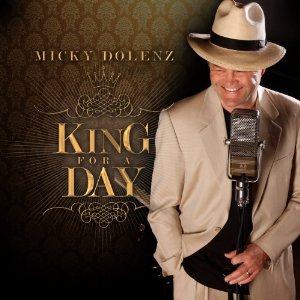
Micky Dolenz — King For A Day

By David M.Beard

Today, Micky Dolenz’s name is synonymous with The Monkees, the pre-fab four who brought us unforgettable songs like “(Theme From) The Monkees,” “Last Train to Clarksville,” “I’m A Believer,” “I’m Not Your Stepping Stone,” “Pleasant Valley Sunday,” “Porpoise Song” (Theme From “Head”) and “That Was Then, This Is Now.”  Micky Dolenz is a part of The Monkees’ extended consciousness.

For this new collection, Dolenz has left behind his pop-comedic sensibilities in favor of the stylized crooner approach that breathes new life into songwriter Carole King’s colorful catalogue.  King For A Day gathers together a handful of Micky’s favorite songs as written by King. While this is a “cover album,” Dolenz approaches the tracks with a confident swagger reminiscent of Frank Sinatra and Johnny Mathis.  His voice is as potent as ever and the production touches from Brian Wilson musical director Jeff Foskett and engineer extraordinaire Gary Griffin bring Micky’s vocals front and center… right where they belong. 

King For A Day features lush harmonies, organic production and an overall earthiness; it also corrects previous misgivings about Micky’s pipes and paves the way for future releases of this ilk.


The Monkees HEAD (Deluxe Edition) (Rhino Handmade)


By David M. Beard

Perhaps one of the most evolutionary soundtrack/rock albums of its time, The Monkees’ “Head” – released December 1, 1968 – shunned all previously embraced TV series bubblegum sensibilities with shades of social commentary and tongue-in-cheek deprecation. Fueled by the film’s staggered storyline – scripted by Bob Rafelson and Jack Nicholson with input from Micky Dolenz, Peter Tork, Mike Nesmith and Davy Jones – “Head” starred The Monkees in over six different settings and environments. The bond that kept it all together was their music.

Tork had begun to show his merit beyond the pre-premised value of Monkeed-dom during the Headquarters sessions in 1967, and furthered his vernacular during the sessions of The Birds, The Bees & The Monkees where his contributions originated. Next to Nesmith’s vamping “Circle Sky,” Peter’s “Can You Dig It” and “Do I Have To Do This All Over Again” are tracks that illuminate the “Head” listening experience and virtually bring the actual film to life in their accompanying footage. As defining as Tork’s contributions are, the touchstone recordings remain the ethereal “Porpoise Song,” a Gerry Goffin/Carole King offering, and “As We Go Along;” the latter written by Carole King/Toni Stern.

As with Rhino Handmade’s “The Birds, The Bees & The Monkees,” “Head” is a quintessential three-disc box set that comes encased in the original Mylar concept art (so you can see your “head/face” when looking at the album cover). The set retails for $59.98, includes 20 previously unreleased tracks, outtakes and rarities; a live set from the Valley Music Hall in Salt Lake City, UT, a rare radio 1968 interview with Davy Jones and a collectible bonus 7” of the instrumental versions of  “Porpoise Song” and “As We Go Along.”

Available exclusively at Rhino Handmade

Carl Wilson — Youngblood

Review by David M. Beard

While there are few defining solo musical efforts from the members of The Beach Boys, Carl Wilson, the youngest sibling to older brothers Brian and Dennis, did mange to briefly capture lightning in a bottle on this 1983 release.  Faced with the lack of creative flexibility within the group dynamic, Wilson left the band after 1980’s Keepin’ The Summer Alive album to pursue personal music interests.

His first self-titled effort, released in 1981, was a meager eight-track submission with the lovely “Heaven” becoming the memorable hallmark. Youngblood was a far more focused event under the production of Jeff “Skunk” Baxter (Steely Dan and Doobie Brothers fame).  While neither album changed Carl’s status in the music world, they did bring his bluesy and impassioned singing style as well as his rhythm & blues sensibilities to the forefront.  Youngblood also demonstrated that Wilson was itching to compose guitar-led compositions.

 “What More Can I Say?,” “Rockin’ All Over The World” and “Young Blood” are prime examples of Carl finding his inner “honky-tonk.”  There are also tracks of deep substance here; the Billy Hinsche (Dino, Desi & Billy) penned “One More Night Alone” and the toe-tapping “What You Do to Me” remain the collection’s strongest recordings.

The liner notes, written by Hinsche, provide a compelling backstory and song-by-song analysis that sheds light on just about every facet of the period and the recordings.

While this album is not as dark and brooding as Dennis’ Pacific Ocean Blue and Bambu albums, or as esthetically evolved as 2004’s Brian Wilson Presents SMiLE, Youngblood is a vivid reminder of why The Beach Boys relied so heavily on the voice of the youngest Wilson, and why they have never been as good since Carl passed away in February of 1998.